

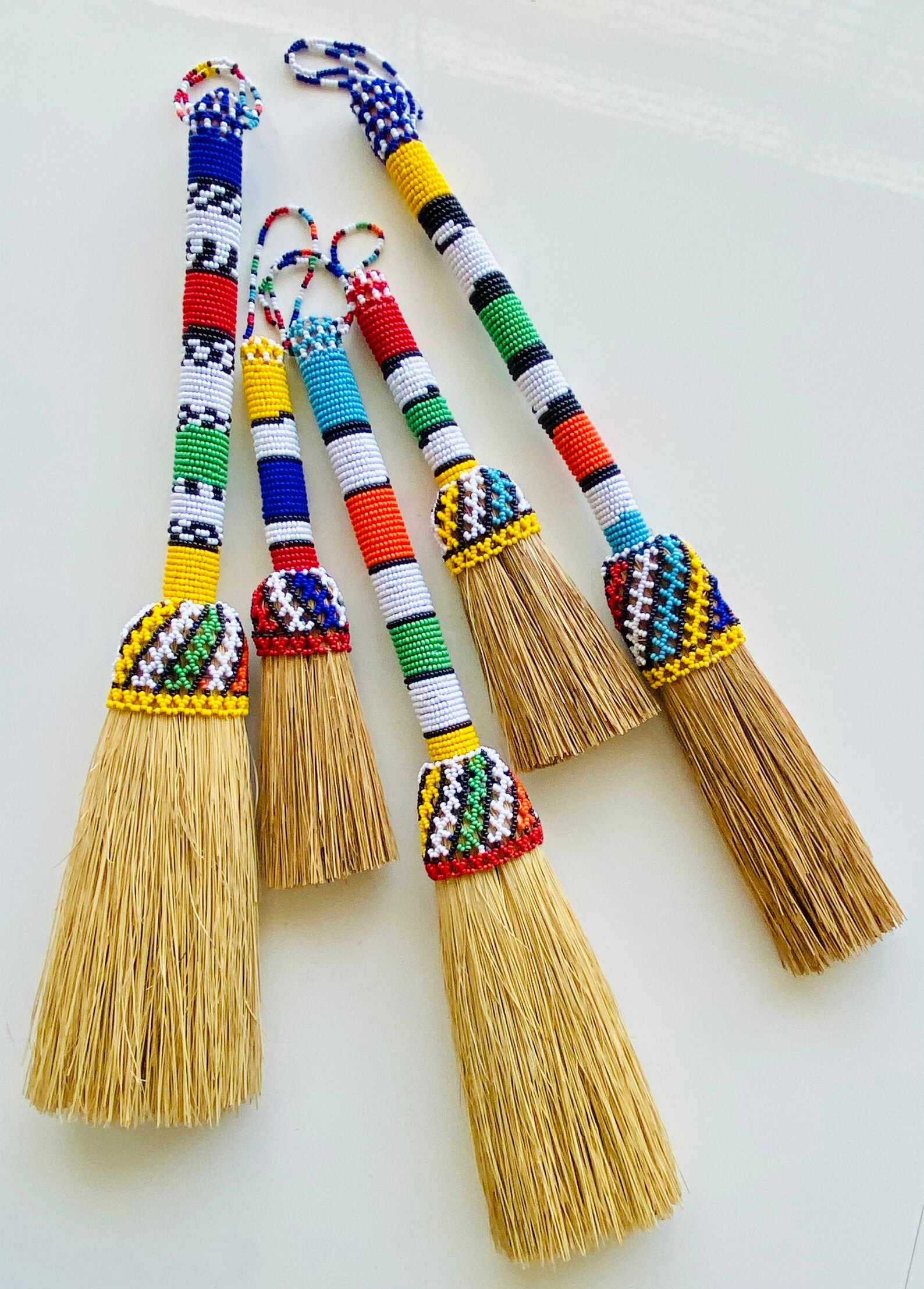
From bustling city markets to quiet rural villages, brooms have long held a place in African daily life. But these are no ordinary sweeping tools — traditional African brooms blend practicality with craftsmanship, storytelling, and style. Today, these iconic sweepers have found their way not just into homes across the continent, but into global households as both cleaning tools and decorative pieces. These are the top six most cherished traditional brooms from Africa.

Ghana’s Bolga Grass Broom
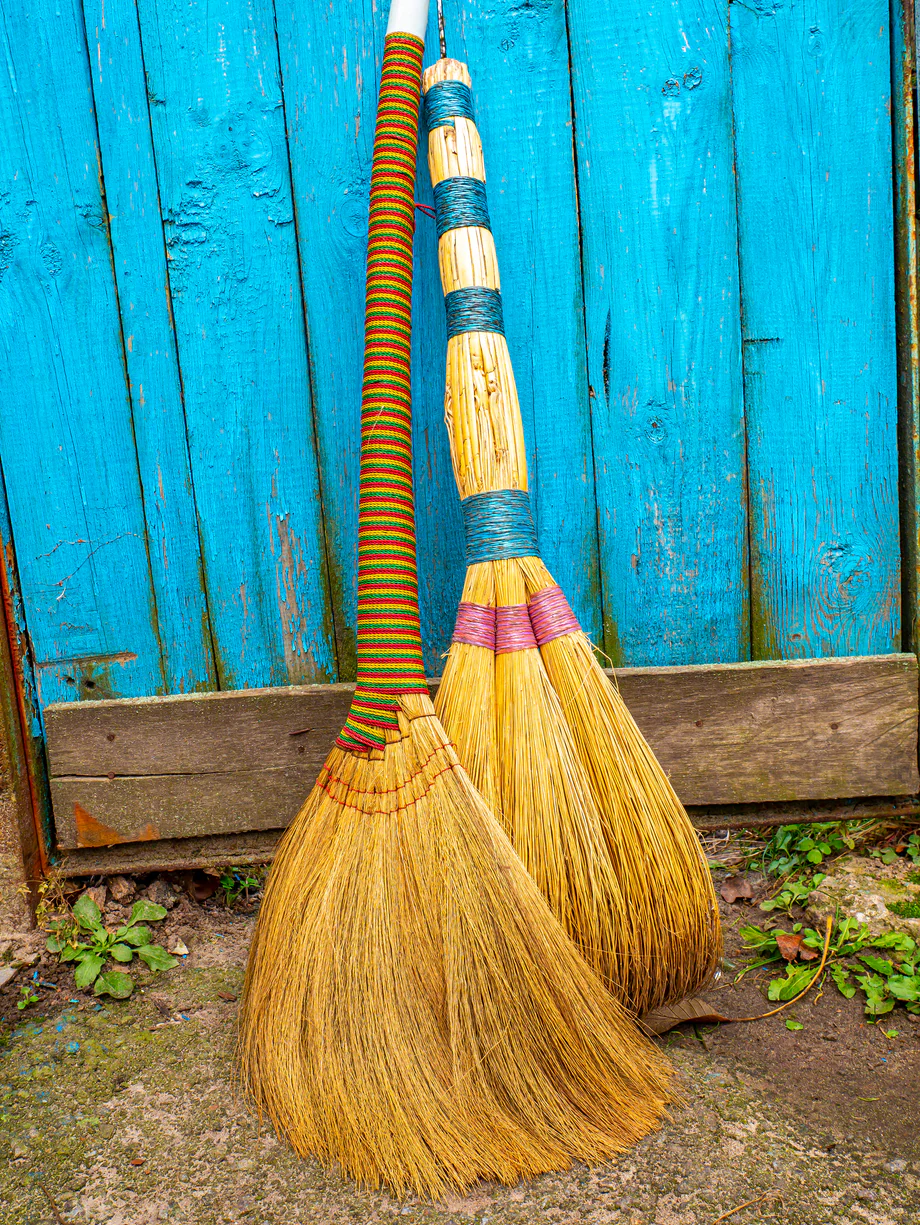
Handcrafted by artisans in northern Ghana, the Bolga grass broom is made from vetiver or elephant grass. Its slender, tightly bound bristles make it ideal for sweeping smooth floors and courtyards. Known for its durability and flexible design, this broom often features colourful thread wrappings at the handle, adding a vibrant touch that makes it as beautiful as it is functional. Today, Bolga brooms are popular in eco-conscious households around the world, prized not only for their sweeping ability but also for their rustic charm as wall hangings.
South Africa’s Imbenge Grass Broom
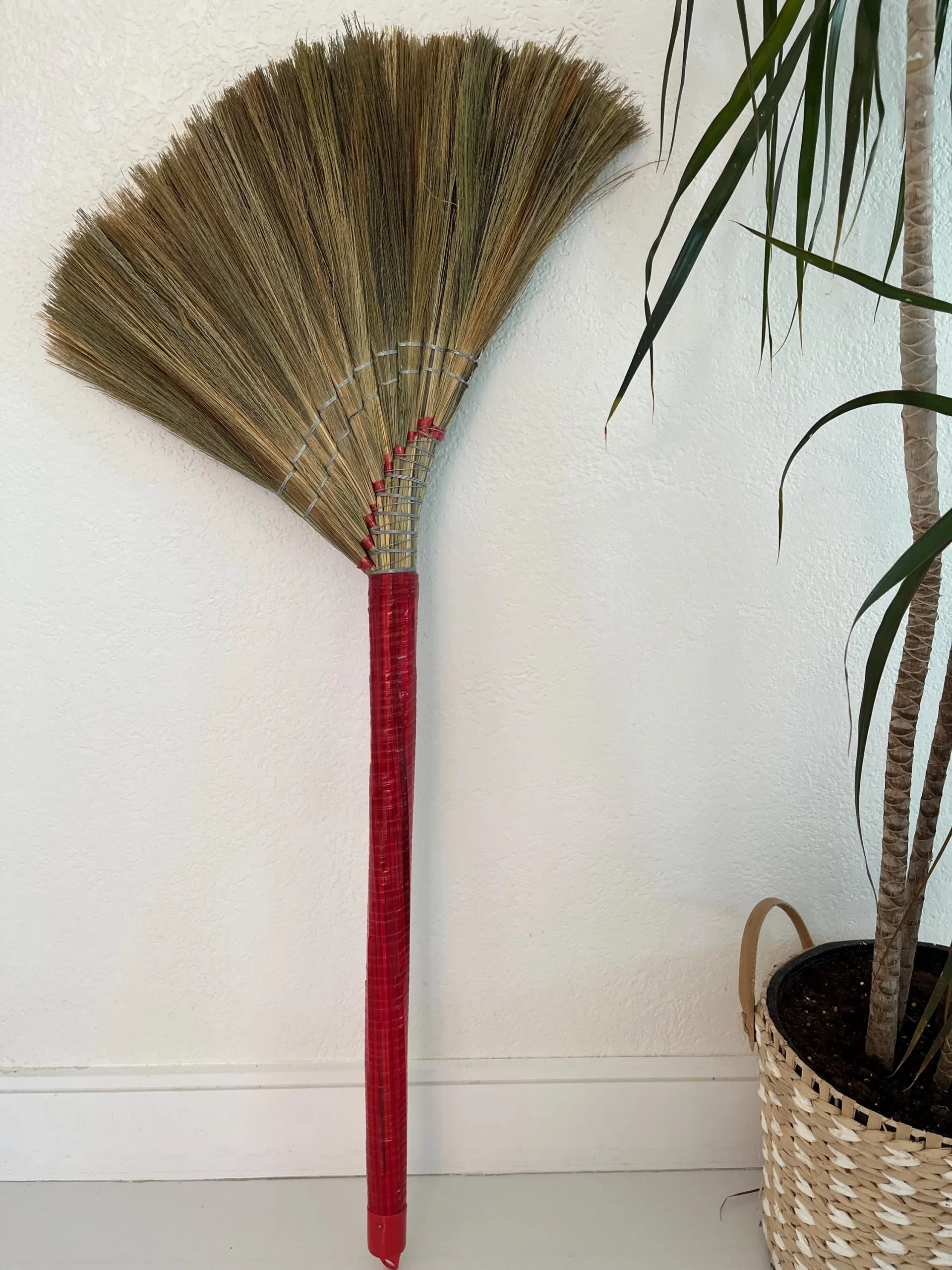
The imbenge broom is traditionally made by Zulu communities using wild grass or palm fibres bound tightly with recycled plastic or natural fibre twine. Its fan-shaped bristles are excellent for clearing dust and fine debris, both indoors and outdoors. Beyond cleaning, these brooms are often displayed as a symbol of hospitality or used during cultural ceremonies. With their distinctive circular or diamond-patterned bindings, imbenge brooms are increasingly found in homes globally, either as practical sweepers or as striking, handmade décor items.
Nigerian Palm Frond Broom (Ijabu Broom)
Simple yet effective, the Nigerian palm frond broom — often called the Ijabu broom — is a staple in many West African households. Crafted from the midribs of palm fronds, the broom has a lightweight, flexible form that makes it perfect for sweeping courtyards, verandas and indoor floors. While traditionally used for daily cleaning, these brooms are now also sold as eco-friendly alternatives to plastic brushes in international markets. Many homes use them as part of boho or rustic-inspired interiors, where they add authenticity and cultural depth.
Ethiopian Meskel Broom
In Ethiopia, the Meskel broom — named after the Meskel festival — is commonly woven from stiff grasses or sorghum stalks. Known for its compact, short handle, this broom is often used for tidying mud floors or outdoor spaces. Meskel brooms are associated with community gatherings and are sometimes decorated with simple etchings or natural dyes. Today, they can be found in African craft stores abroad or as part of ethical homeware collections that celebrate traditional artisanship.
Moroccan Palm Leaf Broom
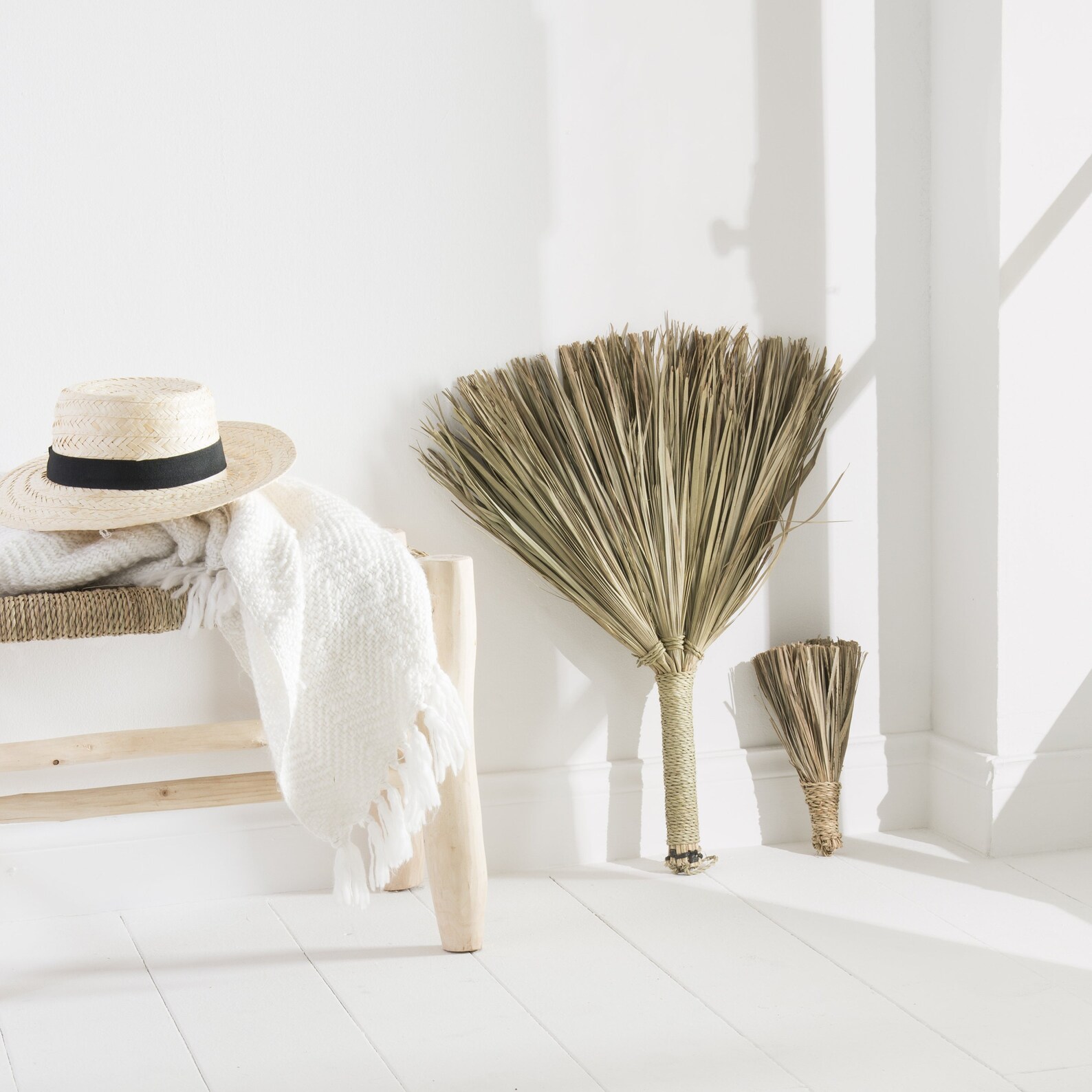
From the markets of Marrakech to modern Moroccan homes, the palm leaf broom is a familiar sight. Made by binding strips of dried palm leaves together, this broom is designed for durability on rough surfaces, from tiled courtyards to stone paths. Its natural materials and simple construction make it an appealing choice for those looking for sustainable, zero-waste cleaning tools. Many design-conscious homeowners worldwide now display Moroccan palm leaf brooms as wall art or functional pieces in minimalist and eco-friendly interiors.
Ugandan Sorghum Stick Broom
In Uganda, brooms made from sorghum sticks or millet stalks are an everyday essential. The stalks are gathered, dried and bound tightly at the base, creating a sturdy sweeping head. Traditionally used for keeping earthen floors clean, these brooms are still widely used across rural Uganda. Today, they’re gaining popularity internationally as sustainable cleaning options, often paired with woven baskets and mats in homes seeking an earthy, natural aesthetic.
Sweeping Traditions into Modern Living
Whether used for cleaning or as eye-catching home décor, traditional African brooms represent more than just utility — they embody craftsmanship, community, and culture. Next time you’re looking to refresh your home with a functional yet beautiful item, consider one of these timeless brooms — a simple tool with a rich story to tell.

