

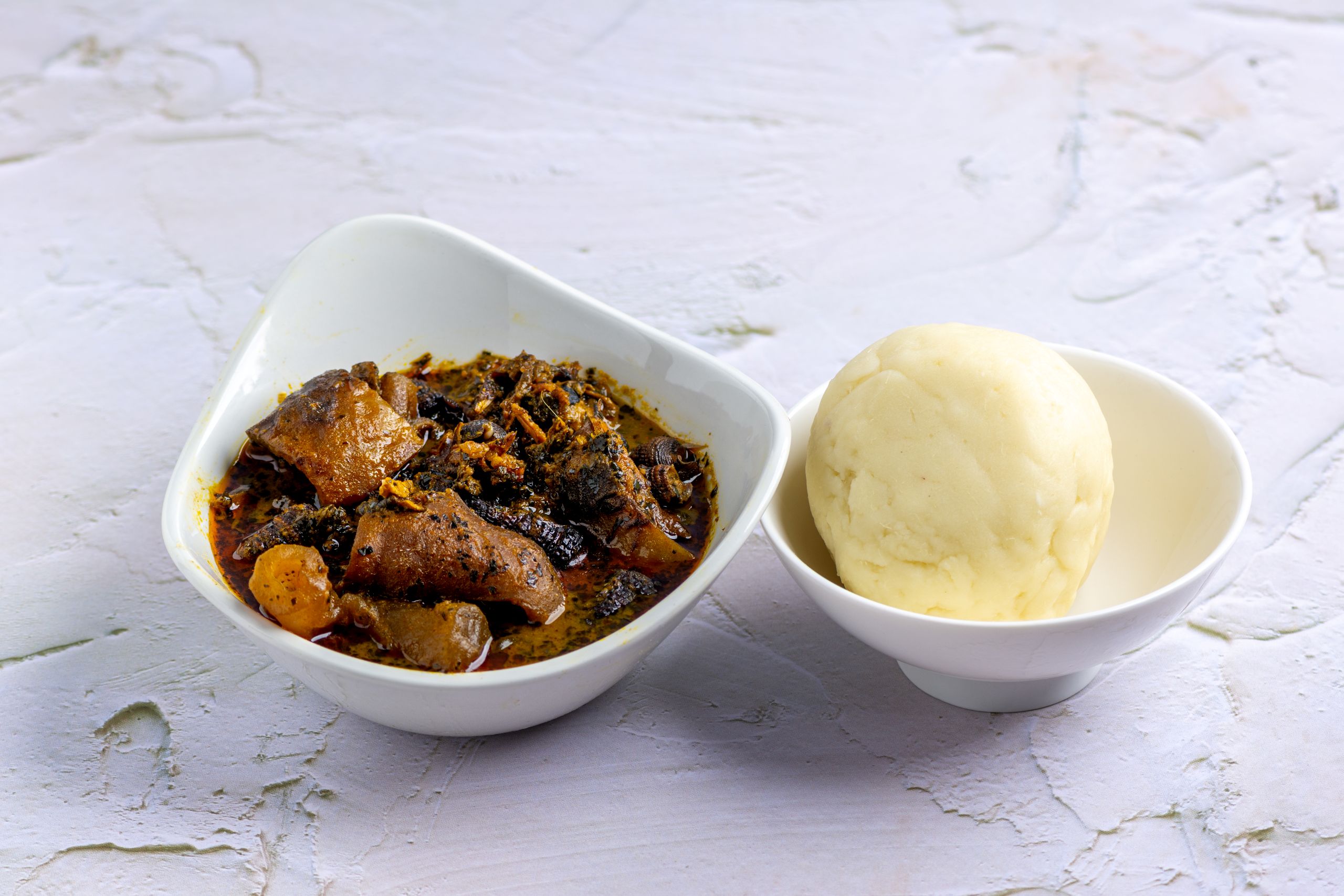
Fufu is one of West Africa’s most iconic and beloved dishes—a starchy, smooth and stretchy staple that’s often the perfect companion to hearty soups and stews. For those unfamiliar with fufu, it isn’t a flavourful dish on its own, but rather a soft, dough-like side designed to be dipped, scooped, and swirled through rich sauces. Its unique texture and preparation make it a standout in African culinary traditions.
In this guide, we’ll explore how to make authentic fufu at home, dive into its fascinating origins, and uncover the different variations found across West Africa.
The Origins of Fufu
Fufu’s roots trace back to Ghana, where the Akan people are believed to have first developed it centuries ago. Traditionally, it was made by pounding boiled cassava or plantain with a large wooden pestle and mortar until it reached a stretchy, elastic consistency. This process required not just strength but rhythm—a two-person job with a syncopated pounding pattern that is still practised in rural villages.
From Ghana, fufu spread across West Africa, evolving with local ingredients. Today, it is a staple in countries such as Nigeria, Côte d’Ivoire, Togo, and Cameroon, with each region offering its own spin.
Common Fufu Variations
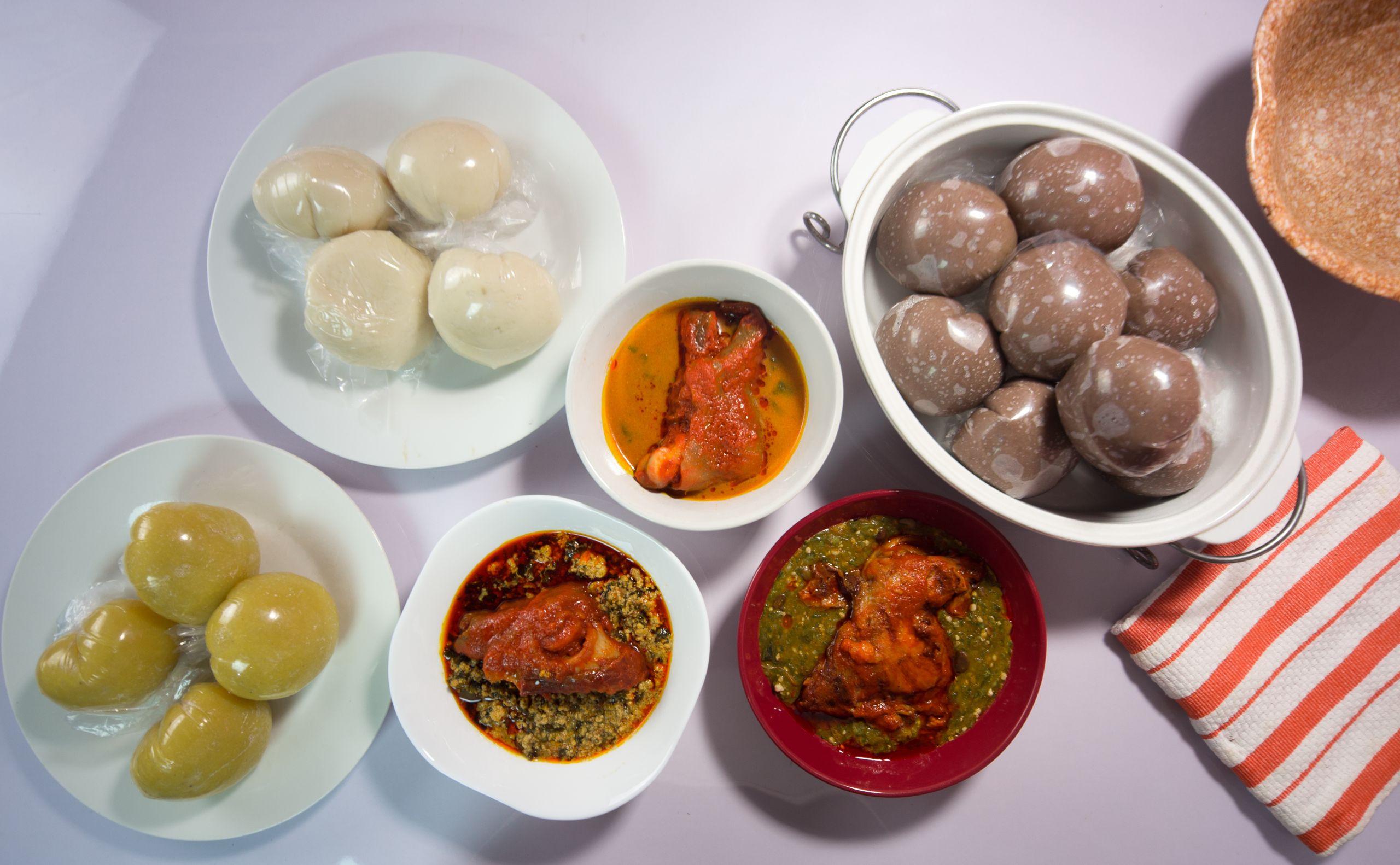
Depending on the country and local produce, fufu is made using different starchy bases:
Cassava Fufu: Found in Nigeria and Ghana, made from fermented cassava flour or fresh cassava.
Plantain Fufu: Slightly sweeter and softer, this version is made with green or semi-ripe plantains and is popular in Ghana.
Yam Fufu: Ivory Coast and Nigeria use yams for a firmer and slightly grainier version.
Cocoyam or Potato Fufu: A variation enjoyed in Cameroon and southern Nigeria.
There are also modern-day adaptations using fufu flour blends that combine cassava, potato, or plantain, making preparation easier for home cooks.
How to Make Classic Cassava Fufu (Using Fufu Flour)
Prep Time: 5 mins
Cook Time: 10–15 mins
Servings: 2–3
Ingredients:
1 cup of cassava fufu flour (available at African or international grocery stores)
2 cups of water
Pinch of salt (optional)
Instructions:
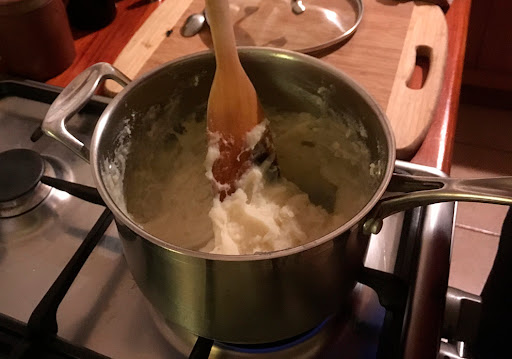
Mix the flour: In a medium non-stick saucepan, combine the fufu flour and water. Stir until you achieve a smooth, lump-free consistency.
Cook the mixture: Place the saucepan over medium heat. Stir continuously with a wooden spoon or spatula as it begins to thicken. This requires some elbow grease—keep stirring to prevent lumps.
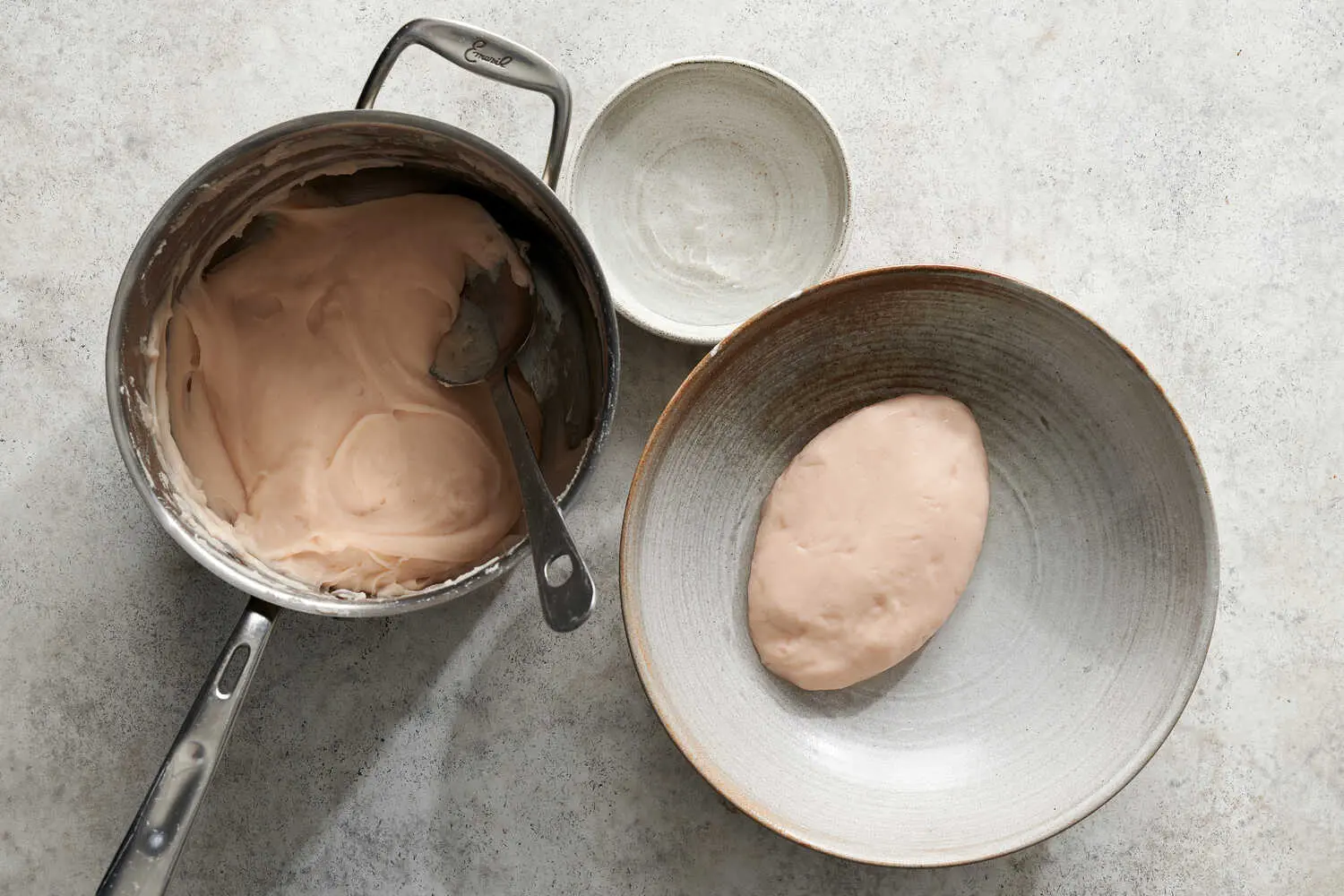
Form the dough: As the fufu thickens, it will pull away from the sides of the pan and start to form a stretchy, dough-like ball. Continue cooking and turning it over for about 10 minutes until smooth and elastic.
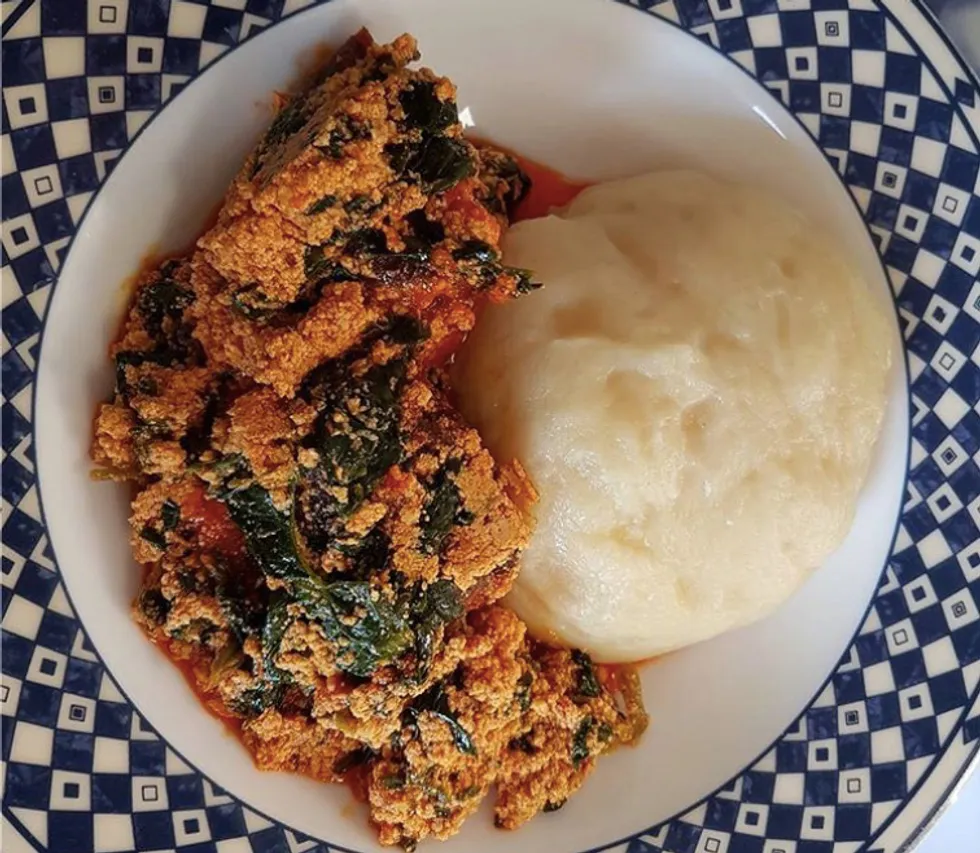
Serve: Shape the fufu into a ball and serve hot with your favourite soup—popular pairings include Nigerian egusi, Ghanaian groundnut soup, or Ivorian sauce graine.
Eating Fufu the Traditional Way
Fufu is traditionally eaten with the hands—no cutlery necessary. A small piece is pinched off, rolled into a ball, and indented with the thumb to scoop up soup or sauce. Swallowing without chewing is common practice, as it’s seen as a way to savour the soup’s flavour fully.
Tip: Wet your hands with water when handling fufu to prevent sticking.

Fufu is more than a side dish—it’s a cultural experience. Making it at home brings a taste of West African heritage to your kitchen. Whether you prefer it soft and stretchy or firm and chewy, there’s a version of fufu to suit every palate.
As African cuisine continues to make waves globally, fufu stands tall as a delicious, comforting entry point into West African cooking. If you’re looking for an authentic culinary adventure, this is where to start.

